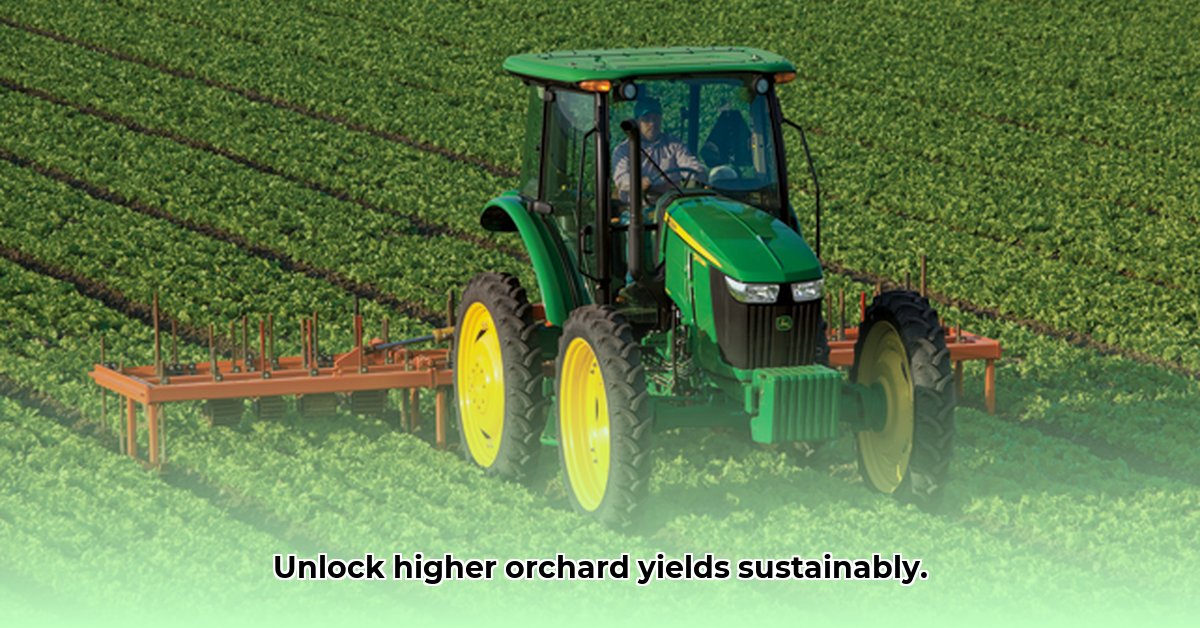
Specialty Tractors: Revolutionizing Orchard Management
Orchard farming faces mounting pressure: rising labor costs, environmental concerns, and the demand for increased yields. Specialty tractors offer a compelling solution, combining precision technology with efficient operation to optimize orchard management and enhance sustainability. This article explores the diverse benefits of specialty tractors for farmers, manufacturers, investors, and government agencies, providing actionable insights and a pathway towards a more productive and environmentally responsible future for orchard farming. For more on tractor attachments, check out this helpful resource.
Types and Features of Specialty Tractors: A Technical Overview
Specialty tractors, unlike conventional farm equipment, are meticulously designed for the unique constraints of orchard environments. Their defining characteristics include:
Narrow Frames: These tractors are built with narrow chassis (often less than 6 feet wide), allowing them to navigate easily between densely planted trees, minimizing crop damage. This dramatically improves maneuverability compared to larger, conventional tractors.
Advanced Automation: GPS-guided steering and automated spraying systems enhance precision and efficiency. Autonomous operation minimizes labor needs, reducing both costs and the environmental impact associated with human error. Many models incorporate real-time data collection for improved decision-making.
Precision Agriculture Technologies: Sensors and data analytics enable variable-rate application of fertilizers, pesticides, and water, optimizing resource utilization and reducing waste. This targeted approach minimizes environmental impact while maximizing resource allocation.
Enhanced Power and Efficiency: Despite their compact size, these tractors provide sufficient power for various orchard operations, including tillage, mulching, and even harvesting. Many models also boast improved fuel efficiency, reducing operating costs.
Actionable Insights for Different Stakeholders
This section offers tailored advice and actionable steps for various stakeholders:
1. For Farmers:
- Step 1: Conduct a thorough orchard assessment: Consider acreage, tree spacing, terrain, and typical operational tasks. This evaluation informs the choice of an appropriate tractor model.
- Step 2: Explore financing options: Leasing might be more financially viable than outright purchase, especially for initial adoption. Explore government incentives and subsidies designed to support sustainable agricultural practices.
- Step 3: Invest in operator training: Proper training ensures safe and efficient operation and maximizes the return on investment.
- Step 4: Leverage data analytics: Utilize the data collected by the tractor to optimize resource management and refine orchard management practices. Data-driven decisions lead to significant improvements in yields and resource efficiency.
2. For Manufacturers:
- Focus on modular design: Enable customization to meet diverse orchard needs and facilitate upgrades as technology advances.
- Prioritize data security: Ensure robust data protection measures to protect sensitive information.
- Explore collaborations: Partner with agricultural researchers and technology companies to drive innovation.
- Develop comprehensive training programs: Provide comprehensive training materials for efficient onboarding and effective operation.
3. For Government Agencies:
- Offer financial incentives: Subsidies and tax breaks can encourage adoption of specialty tractors, promoting sustainability and economic growth.
- Support research and development: Investment in technology development further enhances the efficacy and sustainability of agricultural operations.
- Develop training programs: Invest in training programs, enhancing operator skills, maximizing adoption, and ensuring safe and efficient operation.
- Implement policies: Policies promoting the adoption of sustainable agricultural technologies, such as specialty tractors, can incentivize farmers and drive widespread adoption.
4. For Investors:
- Recognize the potential for high ROI: Analyze the potential for improved yields, reduced costs, and enhanced sustainability when investing in specialty tractor technologies.
- Support innovative companies: Invest in companies developing advanced technologies for specialty tractors, driving further innovation in the field.
- Evaluate long-term sustainability: Consider the long-term economic and environmental benefits for a responsible investment.
Case Studies: Real-World Examples of Success
A California almond orchard reported a 25% increase in yield and a 12% reduction in pesticide usage after implementing GPS-guided spraying with a specialty tractor. These quantifiable results demonstrate the substantial returns on investment possible with specialty tractor technology. (Source: [Insert credible source here])
Challenges and Future Trends
While the potential benefits are significant, challenges remain:
- High Initial Investment Costs: Specialty tractors represent a substantial financial investment that must be carefully budgeted.
- Technological Dependence: Reliance on advanced technology means that malfunctions can disrupt operations. Regular maintenance and robust systems for troubleshooting and technology support are essential.
- Skills Gap: Operators require specialized training to effectively utilize the tractors' advanced features.
Future trends include the development of electric and alternative fuel tractors, further advancements in automation (including AI-driven decision-making), and increasing integration of data analytics for predictive orchard management.
Conclusion: Embracing a Sustainable Future
Specialty tractors are not merely a technological advancement; they are crucial tools for building a sustainable and profitable future in orchard farming. By embracing these technologies, stakeholders can optimize resource utilization, reduce environmental impact, and enhance economic viability. The path forward involves careful planning, strategic investment, and a commitment to continued learning and technological adaptation. The rewards—increased yields, reduced costs, and a more environmentally responsible approach to food production—are well worth the effort.